Reducing Noise with Lubrication
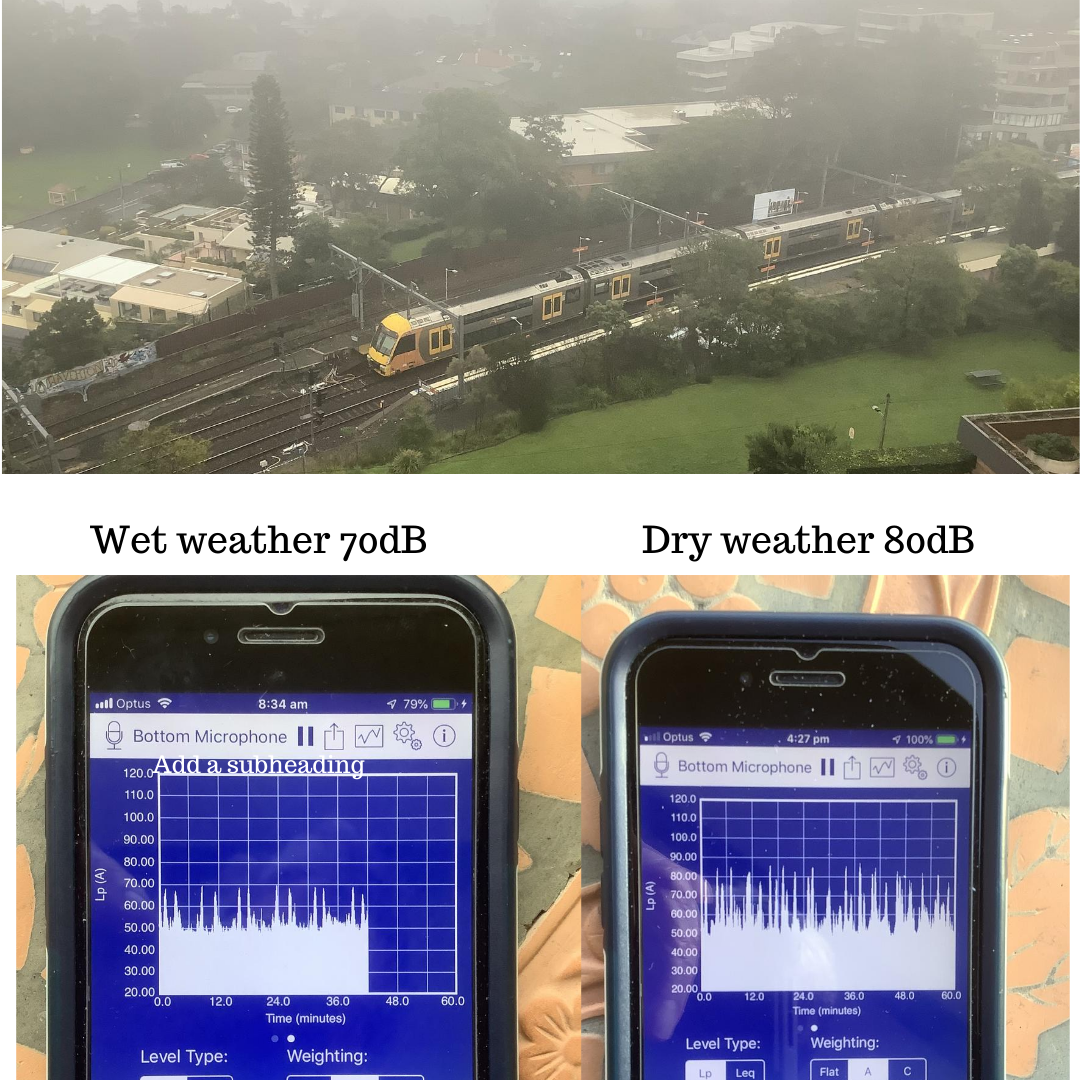
Ian Links, one of our most active members, has taken some noise measurements from his balcony on a rainy day and on the following day which was dry. If you look closely at the picture of the phone recording the noise levels, the peaks on the wet weather day are at 70 decibels while the peaks on the dry weather day are at 80 decibels. How much difference does 10 decibels make? Plenty. The noise at 80 dB is 10 times louder than that at 70dB. So one way to reduce the noise is to have it rain all the time! A better way, is to provide lubrication on the tracks. Enough to make the wheels slide nicely around the bend but not so much as to make the train slip and slide all over the place. Fortunately there is a technology that does just that and it is called "Top of Rail Friction Modification" and is called TORFMA for short.
Sydney Trains has been trialing two TORFMAs in the area. One is clearly visible from the bridge at Bridge End on the track running to the city. If you stand on the bridge you can listen to the train pass the TORFMA and notice that the noise on one side of the bridge is less than on the other. The measurements we have taken show that this TORFMA can reduce the noise on this track by between 10 and 15 decibels (10 to 30 times -remember the decibel unit is exponential). It works. Unfortunately, the tests are showing that the effect of this lubrication only persists for around 200m, so that would require about 10 in each direction between Waverton and Wollstonecraft. In addition, the reduction does not persist over time as the tracks begin to become corrugated. So TORFMAs are only part of the solution.
One similar technology as been developed by ELPA an innovative train noise management company from Slovenia. The company installed their lubrication technology in one day in Barcelona and the results are shown in the video below.
ELPA claims that the lubrication they use will persist for over a kilometre and that the application process is more efficient than the traditional lubrication methods.
We are encouraging Sydney Trains to trial this technology, but as yet they have not agreed.
Be the first to comment